In December 1901, the U.S. Post Office dropped the “Private Mailing Card” requirement,
allowing simpler “Post Card” designation.
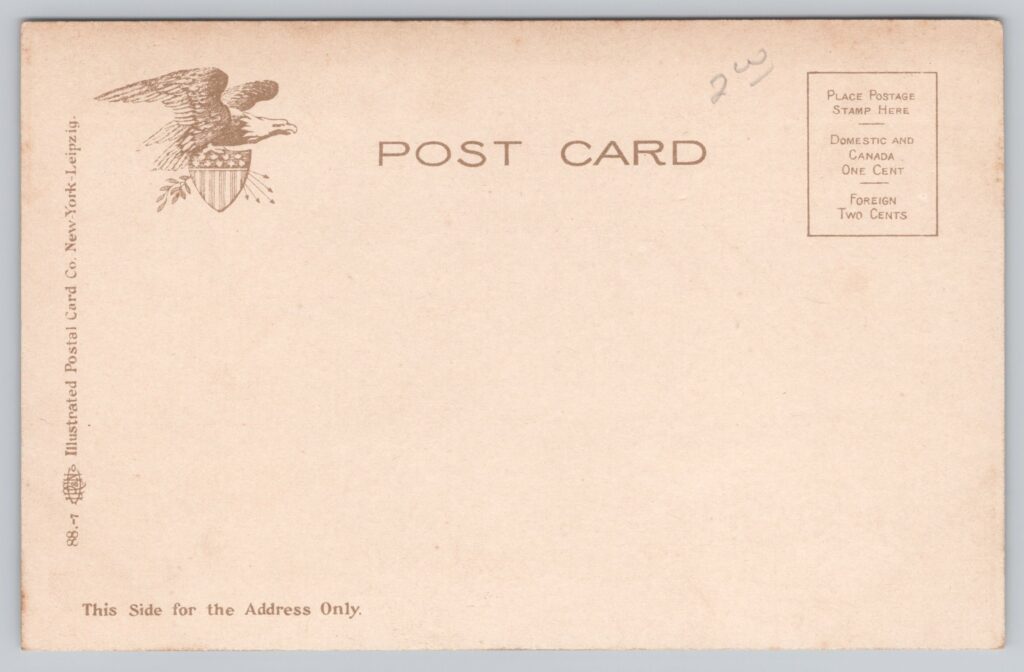
Messages remained restricted to the front, creating the classic undivided-back format.
This era saw a boom in production, especially from German printers.
Key Characteristics:
- Back: Undivided; often labeled “This side for the address” or similar. Stamp box usually present.
- Front: Message written around the image, often in white space at bottom or sides.
- Size: Standardizing to approximately 3½ × 5½ inches.
- Printing: High-quality lithographs; many marked “Printed in Germany.”
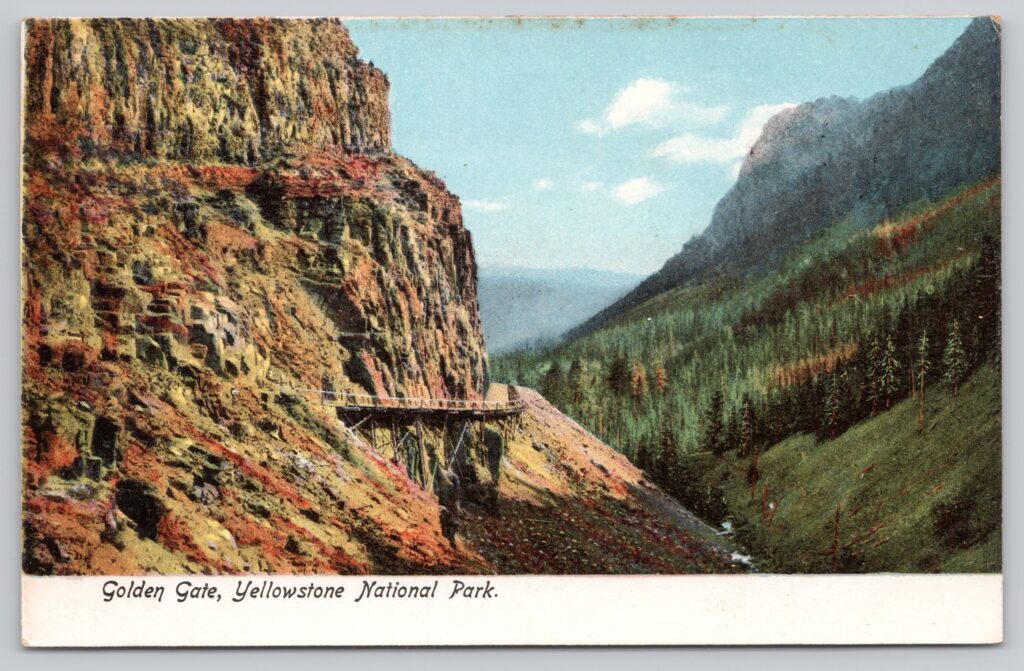
- Images: Scenic views, hand-colored photos, and early real photo postcards (RPPC) appear.
Dating Tips:
- Undivided back combined with “Post Card” (with space) places it 1901–1907.
- “Printed in Germany” on back typically indicates pre-1914 (World War I disrupted imports).
- Early stamp box brands (e.g., AZO, VELOX) can provide additional clues for RPPCs.
- Newman Post Card Company 1904 – 1918